 +971 4 232 7933
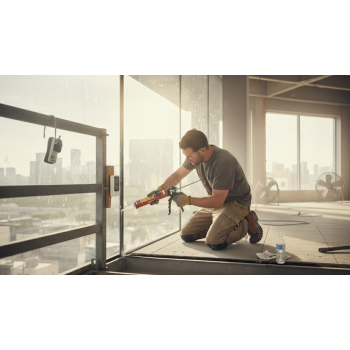
In construction and installation
work, sealants play a vital role in bonding, waterproofing, and
protecting joints and gaps. However, one critical factor that often goes
unnoticed is how temperature and humidity affect the curing process
of sealants. Understanding this relationship helps contractors ensure better
performance, longer durability, and fewer failures on-site.
1.
What Is Sealant Curing?
Curing is the process where the
sealant transforms from a soft, paste-like state to a firm, elastic material
capable of withstanding movement and stress. This transformation depends on
chemical reactions triggered by moisture, heat, or both—depending on the
sealant type (e.g., silicone, polyurethane, hybrid).
2.
How Temperature Affects Sealant Curing
Temperature directly influences the
chemical reaction speed:
- Low Temperatures (Below 10°C):
- Slows the curing process, leading to delayed
hardening.
- Can cause poor adhesion and incomplete curing.
- Sealants may remain tacky for extended periods.
- High Temperatures (Above 30°C):
- Accelerates the curing process, sometimes too quickly.
- May cause skin formation before proper joint filling.
- Can lead to surface cracking or poor bonding.
✅ Krafthaus Tip: Always store and apply sealants at
recommended temperatures, typically between 5°C and 35°C for optimal
results.
3.
The Role of Humidity in Sealant Performance
Humidity is especially crucial for moisture-curing
sealants (like silicones and hybrids):
- Low Humidity (<30% RH):
- Reduces the moisture available for curing.
- Causes uneven curing or incomplete polymerization.
- The outer layer may cure while the inside remains
soft.
- High Humidity (>80% RH):
- Speeds up surface curing, which may trap moisture
underneath.
- Can cause bubbles or weak spots in thick applications.
✅ Krafthaus Tip: In coastal or humid regions like the
UAE, apply sealants in well-ventilated areas and monitor ambient conditions
before and after application.
4.
Real-World Impact on Construction Sites
Inconsistent curing due to improper
environmental conditions can result in:
- Poor adhesion to substrates (glass, metal,
concrete).
- Cracks or peeling
over time.
- Reduced elasticity,
leading to joint failure under movement.
- Aesthetic issues,
like color fading or uneven texture.
Contractors often face these
challenges in outdoor projects, façade sealing, and glazing—especially when
working under intense sun or heavy humidity.
5.
How to Ensure Proper Sealant Curing on Site
To achieve consistent, professional
results:
- Check Weather Conditions – Avoid sealing during rain, extreme heat, or high
humidity.
- Prepare Surfaces Properly – Clean, dry, and dust-free surfaces ensure better
adhesion.
- Apply Correct Joint Depth – Too thick layers delay curing; too thin ones reduce
strength.
- Use Backer Rods Where Needed – Controls sealant depth and ensures correct joint
geometry.
- Choose the Right Sealant Type – Use sealants designed for your environment (e.g.,
Krafthaus Structural Sealant for double glazing and façade joints).
- Follow Manufacturer Guidelines – Always refer to product-specific curing times and
temperature recommendations.
6.
Why Choose Krafthaus Sealants?
At Krafthaus, we understand
the challenges contractors face in the UAE’s hot and humid climate. Our high-performance
construction sealants are formulated to deliver:
- Consistent curing
across varied temperatures.
- Superior UV and moisture resistance.
- Excellent adhesion
to multiple substrates.
- Long-lasting flexibility for movement-heavy joints.
Whether you’re working on glass
façades, aluminum structures, or wooden interiors, Krafthaus sealants are
engineered for reliability and durability.
7.
Final Thoughts
Temperature and humidity may seem
like environmental variables beyond control, but for sealant performance, they
are crucial factors. By understanding how these conditions affect curing,
contractors can ensure stronger bonds, improved aesthetics, and long-lasting
protection.
???? Krafthaus provides a complete range of construction
sealants designed to perform even in the harsh Middle Eastern climate —
helping professionals build with confidence and precision.
