 +971 4 232 7933
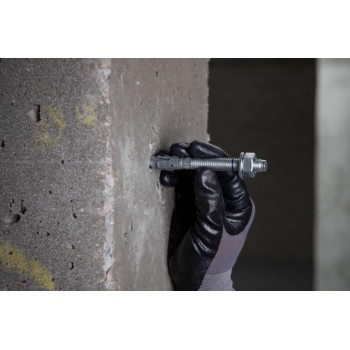
When anchoring heavy loads to concrete — whether for industrial structures, machinery bases, facade fixings, or safety barriers — the strength and safety of the installation depend not only on the anchor itself, but also on how it is installed. Below are the essential best practices to follow to get reliable, durable anchor performance.
1.Choose the Right Anchor Type and Material
·
Anchor Type : Depending on the load (static vs dynamic), the environment (dry, wet, corrosive), and whether the concrete is cracked or uncracked, some anchor types perform better than others. For example:
o Expansion anchors (wedge, sleeve, drop-in) work well for static loads in solid concrete.
o Chemical or adhesive anchors are often better for heavy dynamic loads, for cracked concrete, or where vibration is present.
o Concrete screws are flexible, removable, but might have lower load capacity than large expansion or chemical anchors.
·
Material & Corrosion Resistance : Use materials suited to the environment. Stainless steel, hot-dip galvanized, or specially coated anchors resist corrosion better, especially outdoors or in humid/corrosive settings.
2.Verify Concrete Condition & Strength
·
Concrete Strength & Age : Make sure the concrete has cured sufficiently and has the strength required. Weak, deteriorated, or low-grade concrete will reduce anchor load capacity.
·
Cracked vs Uncracked Concrete If the surface or internal structure has cracks, some anchors lose strength (especially expansion types). In such cases, chemical anchors or anchors designed for cracked concrete are safer choices.
3.Determine Proper Anchor Sizing, Spacing & Depth
·
Embedment Depth : Installation instructions or manufacturer’s data will specify how deep the anchor must go. Deeper embedment increases pull-out resistance. Don’t guess
— follow the specified depth.
·
Edge Distance & Spacing: Anchors placed too close to edges or too near each other can cause the concrete to crack or fail prematurely. Maintain minimum distances (often a multiple of the anchor’s diameter or embedment depth) as per specs or codes.
·
Load Calculations: Understand the forces (tension, shear, combined) the anchor will face. Factor of safety, dynamic loads, and long-term stress need consideration.
4.Use the Correct Tools & Drill Precisely
·
Drilling Tools: A hammer drill, cross drill bits or rotary hammer (with appropriate power) plus good quality masonry bits (carbide tips) are essential.
·
Hole Diameter & Depth Accuracy: Drill the hole to the exact diameter and depth required. Use a bit size that matches the anchor; too large a hole, and the anchor won’t grip well; too small, and it may not fit or could be stressed.
·
Use Depth Markers: Marking the drill bit with tape or using a depth stop helps ensure the hole isn’t too shallow or too deep.
5.Clean the Hole Thoroughly
·
Remove Dust & Debris: Dust and debris in the hole dramatically reduce performance (particularly for chemical anchors). Use a combination of brushing, blowing with compressed air, or vacuuming until the hole is clean.
·
Special Cleaning for Adhesive Anchors: For bonded/chemical anchors, more than just a blow may be needed — often a sequence of blow → brush → blow again.
6.Install & Tighten According to Spec
·
Insert Anchor Correctly: Make sure the anchor is seated fully, expansion components are positioned properly, no misalignment.
·
Torque & Tightening: Use a torque wrench or specified tightening tool. Over-tightening can damage the anchor or concrete; under-tightening may result in insufficient expansion or clamping force.
·
Flush Finish When Required: In applications where the anchor head or fixture surface must be flush, ensure that’s achieved without compromising strength.
7.Safety During Installation
·
Personal Protective Equipment (PPE): Always wear eye protection,helmets, ear protection, gloves, and a dust mask when drilling or hammering into concrete.
·
Tool Safety: Secure work area, avoid loose objects, ensure drills/hammer drills are well maintained.
·
Avoid Mistakes with Angulation: Hole must usually be perpendicular to the surface, per manufacturer’s specification. Drilling at an angle can weaken grip.
8.Inspection, Testing & Maintenance
·
Proof or Pull-Out Testing: Particularly for safety-critical anchors, perform a test to ensure they meet load requirements after installation.
·
Visual Inspection: Look for cracking, corrosion, movement or loosening of the anchor over time.
·
Periodic Maintenance: In harsh environments, inspect periodically, especially after events like freeze/thaw cycles, heavy loads or vibration exposure. Replace anchors showing signs of deterioration.
·
Periodic Maintenance: In harsh environments, inspect periodically, especially after events like freeze/thaw cycles, heavy loads or vibration exposure. Replace anchors showing signs of deterioration.
·
Documentation: Keep records of what type was used, where, torque applied, test results, etc. This helps with long term maintenance and liability.
9.Follow Manufacturer & Code Requirements
·
Always start with the anchor manufacturer’s datasheet. They give the specifics for hole size, embedment, spacing, torque, and load ratings.
·
Be aware of local building codes, guidelines, or standards (structural, safety, seismic) that may apply. These often dictate minimum requirements for spacing, edge distance, load factors, etc.
10.Avoid Common Pitfalls
Some mistakes are common and can reduce anchor effectiveness:
·
Drilling too close to edges → concrete cracking.
·
Failing to clean holes → adhesive or mechanical grip compromised.
·
Over- or under-torquing bolts.
·
Using anchors unsuitable for the environment (e.g. non-corrosion resistant in humid or chemical areas).
·
Ignoring concrete quality or condition.
Conclusion
Installing heavy-duty anchors in concrete properly is not just about having the right anchor — it’s about the whole process: choosing the correct type and material, preparing the concrete, drilling precisely, cleaning, installing with correct torque, testing, and maintenance. When all these steps are followed carefully, the result is a secure, durable connection that can safely support heavy loads over time.
